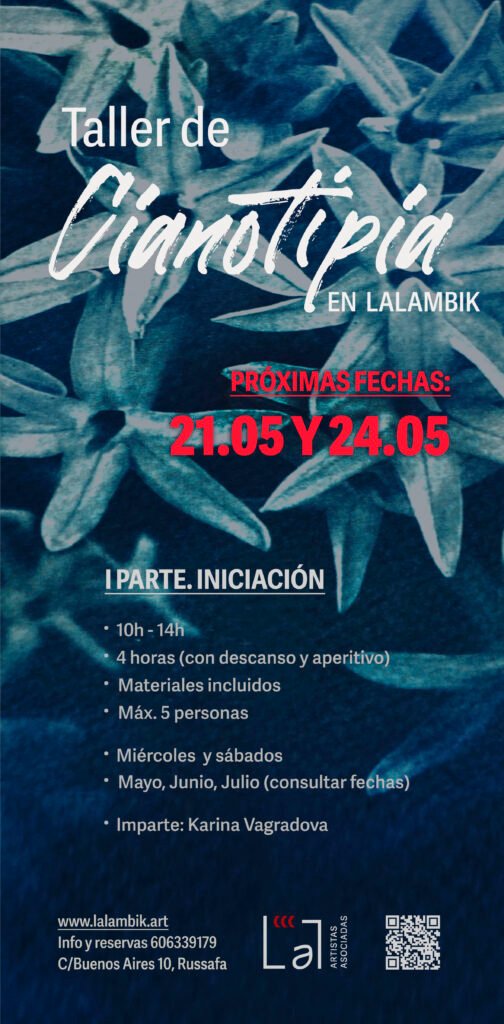
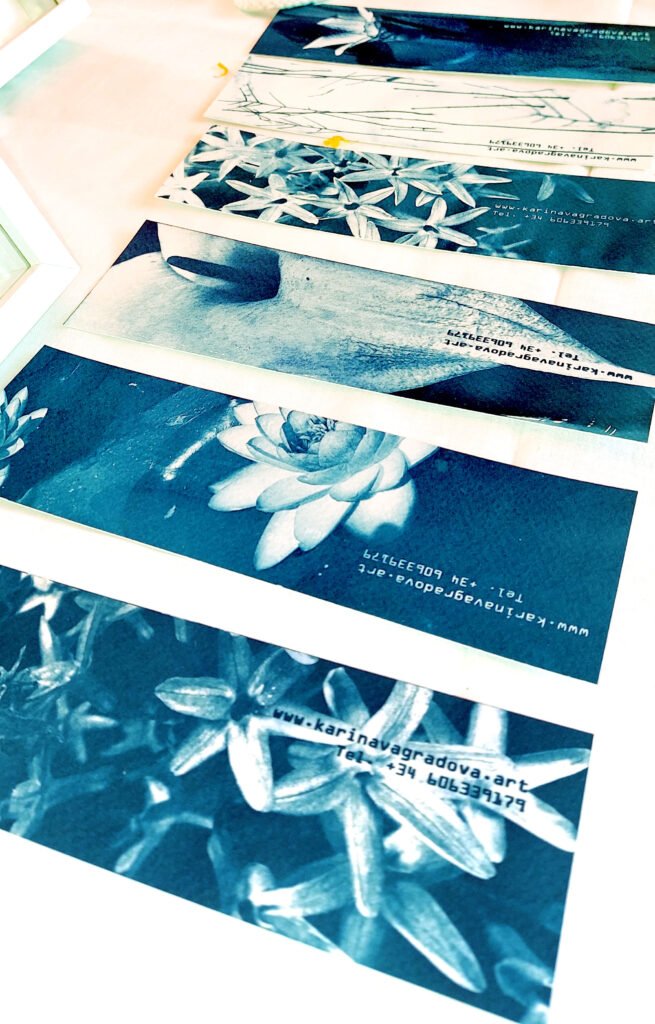
In May 2026, Lalambik begins its Cyanotype workshop season, a photographic printing technique using blue inks!

These spring days will be a delight as we immerse ourselves in the blue sea of small but magnificent works of art, which you'll learn to create using sunlight and take home with you! This workshop will give you enough knowledge to work with cyanotype in your own studio. All you'll need are the materials, running water, and access to direct sunlight, which you'll find in abundance in Valencia. The workshop is led by visual artist Karina Vagradova, who will carefully guide you on this exciting adventure!
The workshop is spread over 2 days, Day 1 will be the Initiation and Day II, Positive cyanotype and personal project.
Duration of the complete workshop: 2 days, 4 hours a day.
You can also sign up for just the first day (introductory workshop).
Schedule: from 10am to 2pm
Maximum 5 people.
Materials included.
Price:
Workshop I. Introduction. – €80
Complete workshop I and II. – €140
Dates to choose from:
During the week: Tuesday and Wednesday. Possible dates: May 12 and 13; May 19 and 20
Weekend: Saturday and Sunday. Possible dates: May 9 and 10; May 16 and 17; May 23 and 24
Dates will be confirmed once all places are filled. A total of 3-4 workshops will be held in May.
Day 1. Initiation.
Duration: 4 hours (with a 20-minute break and snack)
Program:
- Introduction and brief history of cyanotype. Review of the works of contemporary artists who work with this technique. Cyanotype applied to art and crafts and its many possibilities.
- The formula for the photosensitive emulsion and its preparation. We will prepare a sample of the emulsion with the indicated chemicals.
- Emulsifying and drying the paper. We will sensitize the papers with the prepared emulsion and hang them to dry in a place with low light.
- Break and refreshments
- Preparing the creative compositions. Once the paper has dried, we will create our compositions with plants and objects and hold them in place with glass.
- Exposure to sunlight (UV exposure). We will learn how to expose images and control exposure times.
- The developing process. We will learn how to develop cyanotypes with water and how to intervene in this process in order to achieve better results.
- Drying the cyanotypes. Hang the developed prints to dry away from direct sunlight. It is important to ensure thorough drying to obtain a solid and durable cyanotype.
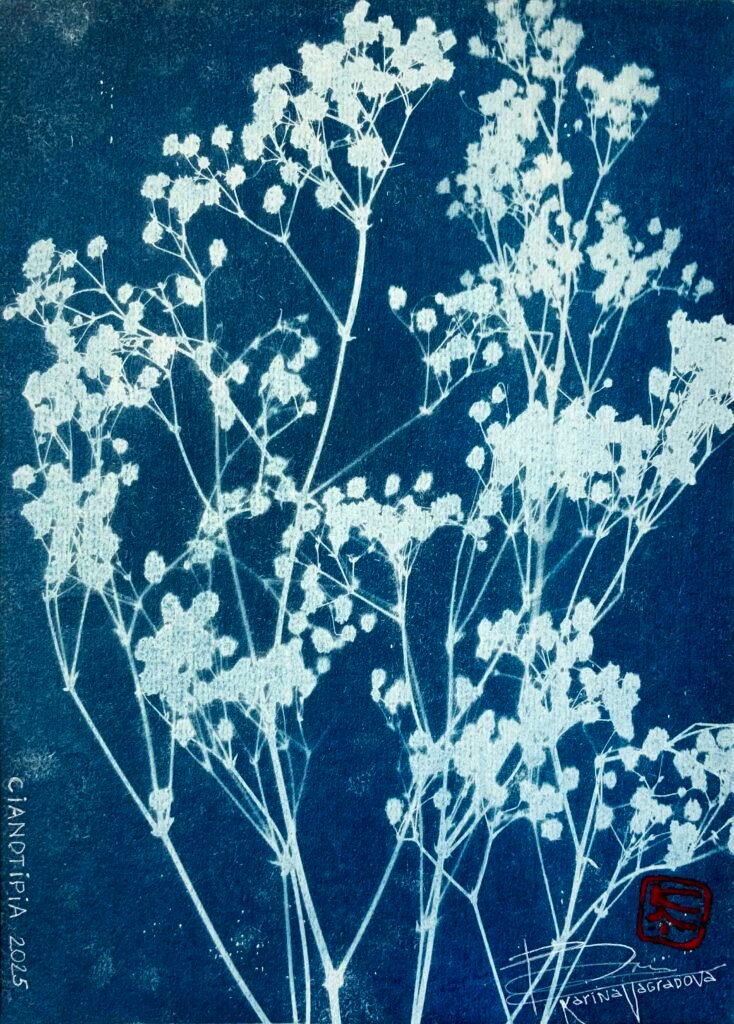
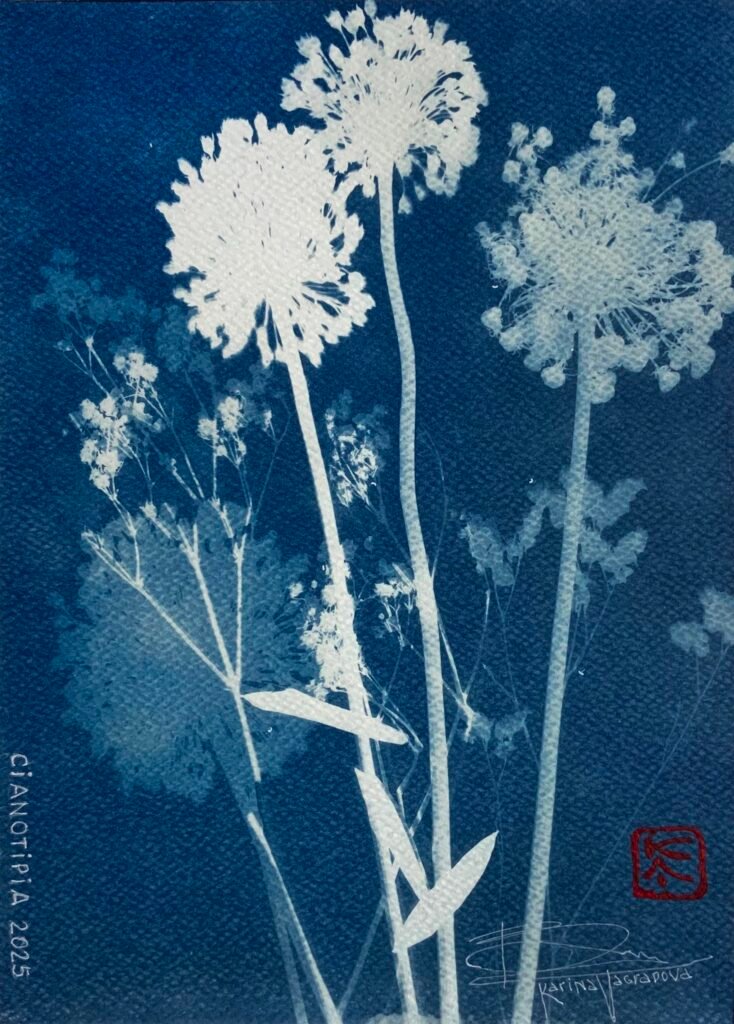
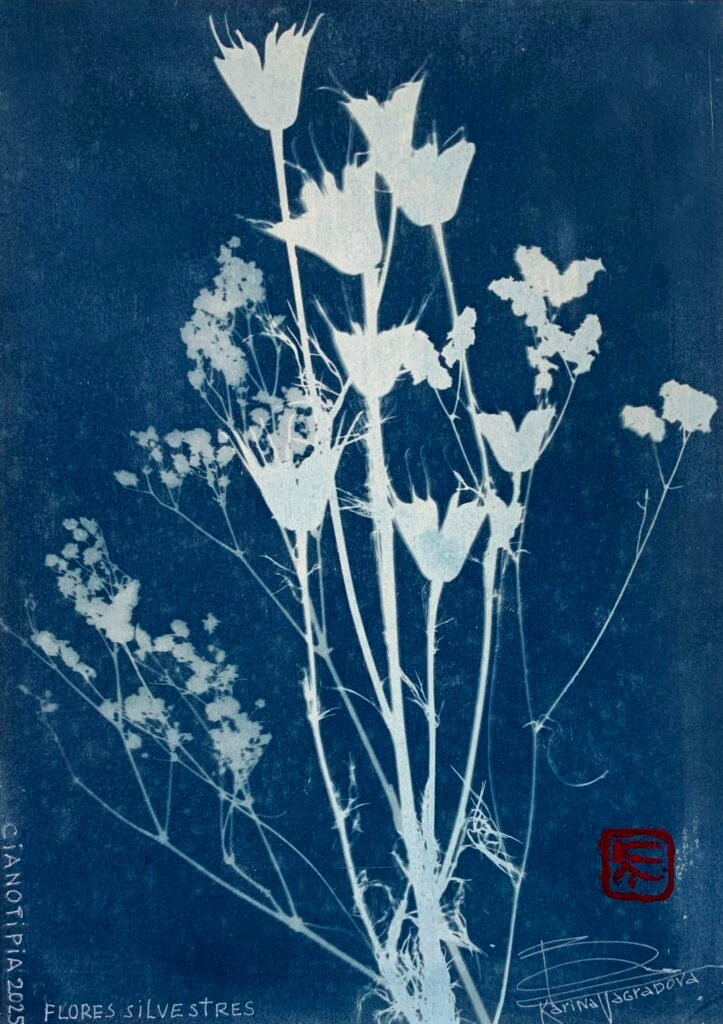
In this first part, each participant will make at least 5 A4-sized cyanotypes.
*It's a technique that benefits from a high UV index, that is to say full sun, Therefore, if there is no sun on the day of the workshop, the number of proposed projects could be reduced.
¡Something to keep in mind!
- Cyanotype stains, so you must wear appropriate clothing and/or bring an apron.
- Wearing a mask isn't strictly necessary when doing cyanotype printing, but it's recommended, especially if you're sensitive to chemicals. While the chemicals used in cyanotype aren't highly toxic, they can cause skin or respiratory irritation in some people.
- Wearing gloves is recommended. We have medium-sized vinyl gloves, but if you have allergies, special preferences, or a different size, please bring your own.
- For the cyanotype images we have prepared different plants, leaves, flowers and etc., however, each person can bring their own objects (flat and/or translucent objects are more advisable).
Day II. Positive cyanotype and the personal project.
Duration: 4 hours (with a 20-minute break and snack)
Here we will delve deeper into the cyanotype technique, learning different methods of printing, intervention, and use of materials.
- Positive cyanotype (with photoliths). Each participant will need to prepare the negatives of the images they want to create beforehand (consult with the teacher). We will obtain at least 4 cyanotypes in positive on paper.
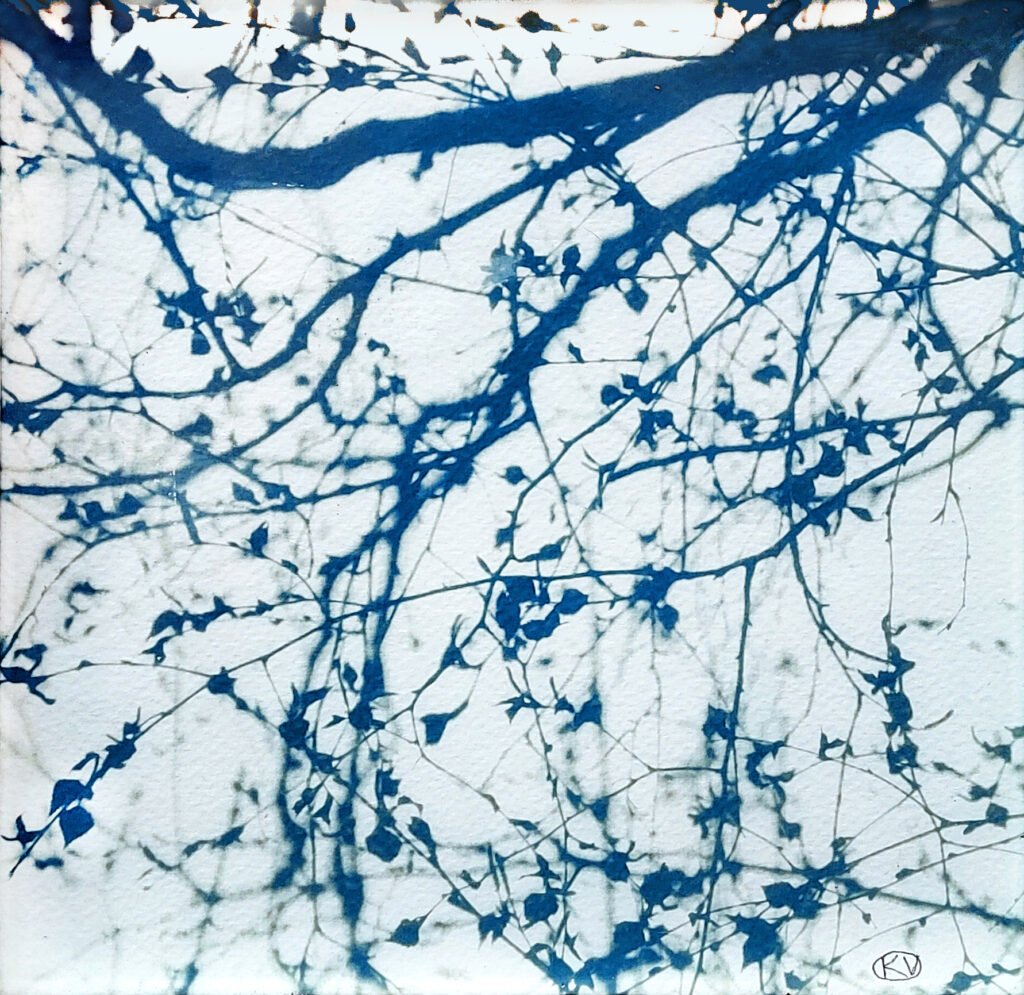
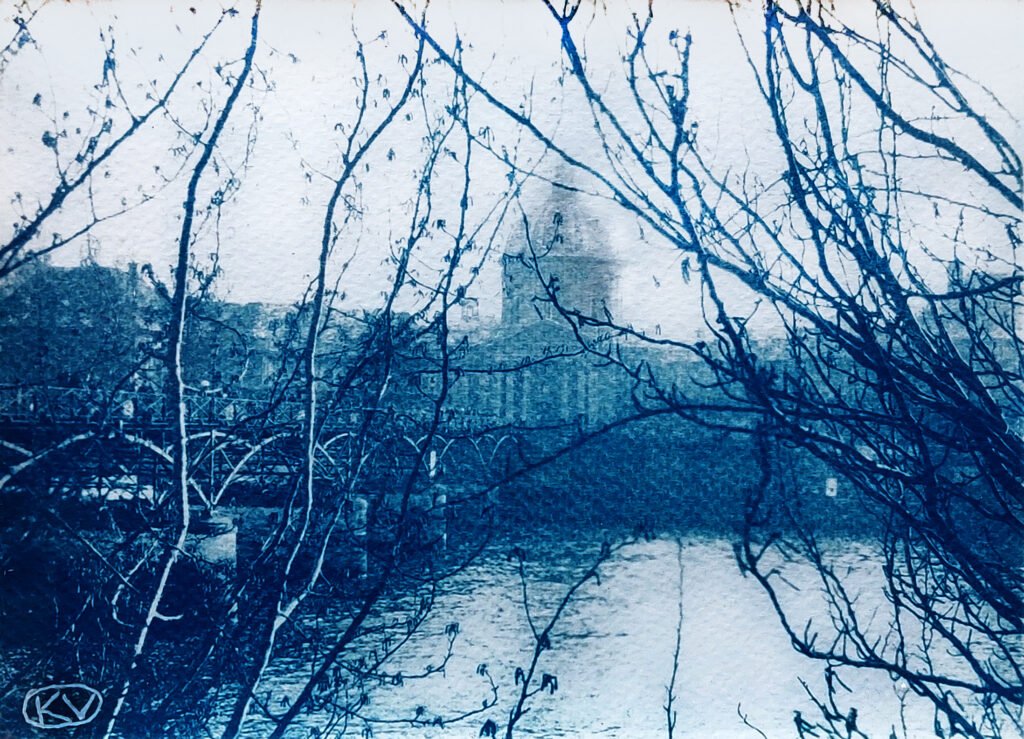
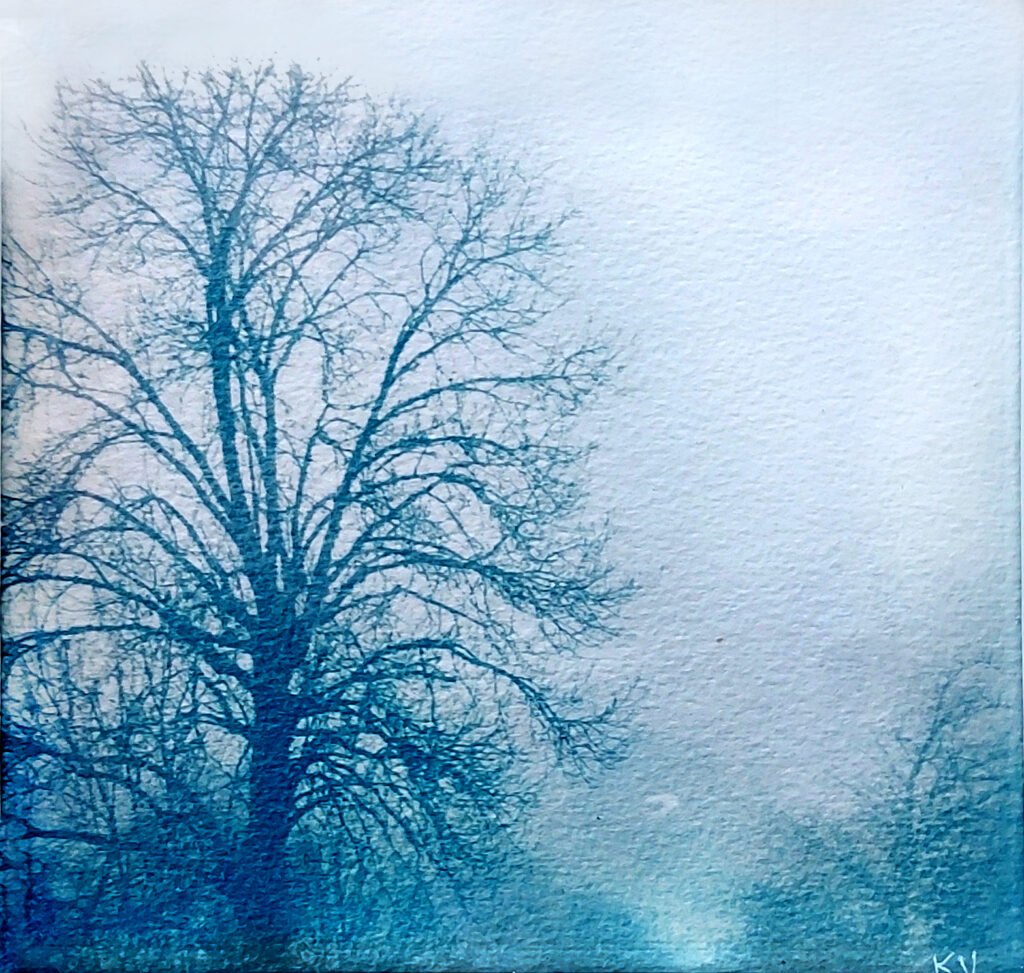
- Personal project.
To carry out the project, workshop participants can choose one of the following modalities to experiment with:
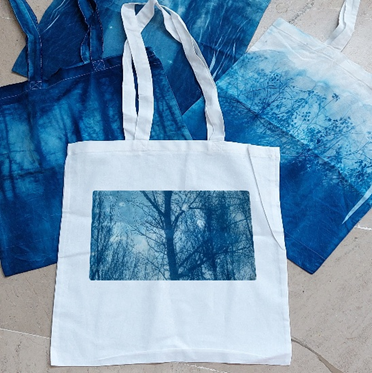
- Cyanotype on fabric. Printing of an A5 or A4 cyanotype on a tote bag (one 100% cotton bag included).
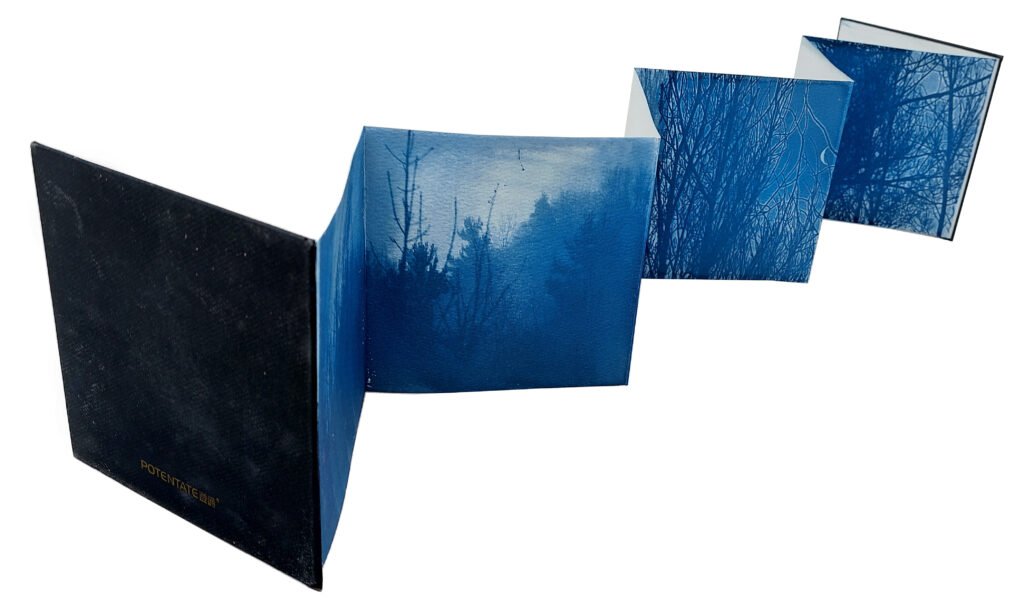
- A small folding book 13x78cm, 300g watercolor paper (1 notebook included)
- Image toning. We will change the cyanotype tone using different formulas: dyeing (tea, coffee or wine), lightening (vinegar, sodium carbonate).
- We can also paint directly with the emulsion or draw on acetate and use the drawing as a negative to convert it into a cyanotype.
On this second day, each participant will make about 10 final cyanotypes of A5 size or 5 of A4 (including the personal project on tote bag, notebook or toned images).
The teacher will carefully supervise and guide each project.
Those interested can sign up for the full 2-day workshop or participate in only Part I, the workshop on initiation, at the choice of each participant.
Starting in June, a free weekly workshop will also be offered for those who want to continue practicing cyanotype.
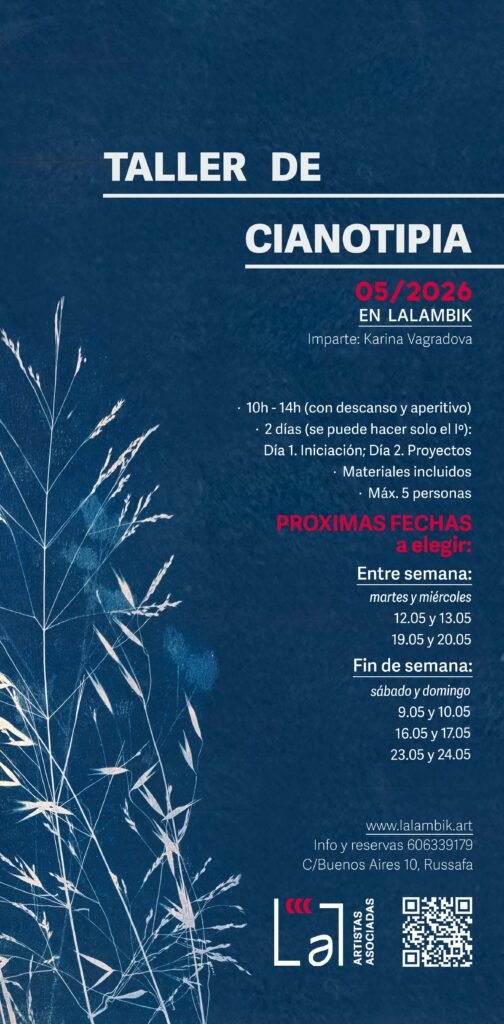
Images from previous workshops.


Cyanotype in process. Demonstration during Russafart 2024